2 November 2026
6 topics in this edition
02 Nov 2026 News
Even as Unemployment Falls, Lack of ‘Decent Work’ in India
UPSC Relevance: GS Paper III – Indian Economy
Context
India's unemployment rate has declined, but the quality of employment remains a serious concern. The challenge is not merely to create more jobs, but to ensure decent, secure, productive and socially protected employment.
Key Findings
| Indicator | 2017–18 | 2023–24 |
|---|---|---|
| Unemployment rate | 6.1% | 3.2% |
| Overall Decent Work Index | 0.247 | 0.302 |
| Manufacturing DWI | 0.324 | 0.411 |
| Transport DWI | 0.285 | 0.350 |
| Agriculture DWI | 0.211 | 0.267 |
Female workforce participation also increased. However, a large proportion of workers remain in informal, insecure and poorly protected jobs. It highlights the gap between employment generation and the creation of decent work.
What Is Decent Work?
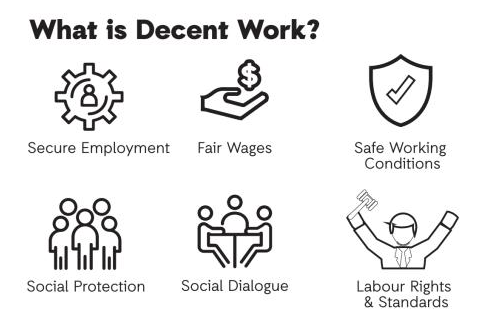
The International Labour Organization (ILO) defines decent work as work that provides:
- Fair and adequate income.
- Workplace rights and dignity.
- Social security.
- Equal opportunities.
- Safe and healthy working conditions.
- Freedom and representation for workers.
SDG 8: Promote sustained, inclusive and sustainable economic growth, full and productive employment and decent work for all.
Sector-wise Analysis
| Sector | Analysis |
|---|---|
| Manufacturing | Highest improvement in DWI, from 0.324 to 0.411 |
| Transport | Improvement from 0.285 to 0.350 due to urban logistics and platform work |
| Agriculture | Lowest DWI; many workers are self-employed or unpaid family workers |
| Construction | Casual employment and subcontracting remain common |
| Wholesale and retail | Insecure employment arrangements continue. |
Major concern: Even in sectors where employment quality has improved, access to social security remains limited.
Why Is Informal Employment a Major Problem?
According to the India Employment Report 2024 (ILO–IHD), nearly 90% of India's workforce is informally employed.
Informal employment is found in:
- Agriculture and construction.
- Home-based production.
- App-based gig and platform work.
- Logistics and supply chains.
- Organised industries through contractual hiring and outsourcing.
Problems faced by informal workers
- No written employment contract.
- Lack of paid leave.
- Limited provident fund coverage.
- Inadequate health and accident insurance.
- Irregular income and job insecurity.
- Weak access to grievance-redressal mechanisms.
Gender and Caste Inequality
Employment opportunities are not equally distributed.
- Women from Scheduled Tribes (ST) and Other Backward Classes (OBC) experienced a decline in decent-work outcomes between 2017–18 and 2023–24.
- Outcomes for men improved during the same period.
- Education, skill training and employment in formal enterprises are associated with better decent-work outcomes.
- Gender and caste disadvantages can combine to increase labour-market vulnerability.
Economic Consequences of Poor-Quality Employment
| Problem | Economic consequence |
|---|---|
| Low and irregular wages | Low household consumption |
| Lack of social security | Greater vulnerability to economic shocks |
| Job insecurity | Lower savings and investment |
| Informal employment | Weakens labour productivity and formalisation |
| Gender inequality | Underutilisation of human resources |
| Regional disparities | Unequal economic development |
Challenges for India
- Informalisation: Employment is increasing without corresponding improvement in job security.
- Social security gap: Many workers remain outside effective insurance and pension coverage.
- Skill mismatch: Educational qualifications and skills do not always match available employment.
- Agricultural dependence: A large workforce remains engaged in low-quality agricultural employment.
- Gender inequality: Women face barriers to secure and well-paid employment.
- Regional disparity: Decent-work opportunities differ significantly across States.
- Gig economy: Platform workers often lack traditional employment-linked protections.
Way Forward
- Formalisation of employment: Promote written contracts, paid leave and provident fund coverage.
- Portable social security: Extend benefits across employers, platforms and geographical locations.
- Skill development: Link vocational training with industry requirements.
- Women-centric policies: Improve childcare, safe transport and access to employment.
- Labour-intensive manufacturing: Generate productive and secure employment.
- Agricultural diversification: Promote agro-processing and rural non-farm employment.
- Social inclusion: Address caste- and gender-based disadvantages in the labour market.
Government Initiatives
| Initiative | Objective |
|---|---|
| e-Shram Portal | National database of unorganised workers |
| PM-SYM | Pension support for eligible unorganised workers |
| MGNREGA | Wage employment guarantee in rural areas |
| Code on Social Security, 2020 | Framework for social security of organised, unorganised, gig and platform workers |
| Skill India Mission | Skill development and employability |
| National Career Service | Employment and career-related services |
UPSC Prelims Practice Question
Q. With reference to the concept of decent work, consider the following statements:
- It includes fair income and workplace dignity.
- It includes access to social security.
- It is associated with Sustainable Development Goal 8.
- It refers exclusively to employment in the organised sector.
Which of the statements given above are correct?
- A. 1 and 2 only
- B. 1, 2 and 3 only
- C. 2, 3 and 4 only
- D. 1, 2, 3 and 4
Mains Practice Question
Q. Discuss the role of labour reforms and social security measures in ensuring decent work for gig and unorganised workers. (10 Marks | 150 Words)
Dwindling Support
UPSC Relevance: GS Paper II – International Relations
Why in News?
On 30 October 2026, the United Nations General Assembly (UNGA) adopted a resolution calling for an end to the U.S. economic, commercial and financial embargo against Cuba. However, support for the resolution declined considerably.
What Is the U.S. Economic Embargo on Cuba?
- The embargo is a series of economic, commercial and financial restrictions imposed by the United States on Cuba.
- It began after the Cuban Revolution of 1959, led by Fidel Castro.
- The U.S. progressively tightened restrictions through domestic laws and executive measures.
- It restricts several forms of trade, investment and financial transactions involving Cuba.
Historical background
- 1959: Cuban Revolution.
- 1960: U.S. began imposing economic restrictions.
- 1961: Diplomatic relations between the U.S. and Cuba were severed.
- 1962: The U.S. imposed a comprehensive trade embargo.
- 1992: UNGA began regularly adopting resolutions calling for the end of the embargo.
What Is the UNGA Resolution?
Official title: “Necessity of ending the economic, commercial and financial embargo imposed by the United States of America against Cuba.”
- It is adopted through voting in the UN General Assembly.
- It calls upon the U.S. to end the embargo.
- It reflects the international community's position on the issue.
- It is non-binding, meaning it does not legally compel the United States to lift its embargo.
Important: Only the U.S. domestic legal and policy process can bring about the removal of its embargo.
Why Has International Support Declined?
It identifies growing geopolitical pressure and changing international alignments.
A. U.S. diplomatic pressure
- The Trump administration reportedly pressured countries to change their voting positions.
- Some countries shifted from supporting the resolution to abstaining or voting against it.
B. Changes in Latin America
- Costa Rica, Ecuador, Argentina and Colombia changed their positions.
- Their relations with Havana have also deteriorated.
C. Russia–Cuba relations
- The U.S. argued that Cuba's relationship with Russia supports Moscow's position in the Ukraine war.
- Ukraine and Poland referred to Cuba's ties with Russia while explaining their voting positions.
D. European countries
- Germany and Italy abstained, departing from their earlier support for the resolution.
Humanitarian Impact of the Embargo
The embargo has contributed to economic difficulties in Cuba, particularly in accessing international finance, fuel, medicines and essential goods.
Major concerns include:
- Shortages of essential medicines and medical equipment.
- Fuel shortages and electricity disruptions.
- Difficulties in importing food and essential commodities.
- Pressure on healthcare, education, water supply and transport.
- Reduced economic opportunities and investment.
Important analytical point: Cuba's economic difficulties also have domestic causes, including structural weaknesses and policy challenges. The embargo is a significant external constraint, but it is not the only explanation for the country's economic situation.
India's Stand on the Issue
India voted in favour of the UNGA resolution calling for an end to the U.S. embargo.
India's position reflects three important principles:
- Multilateralism: International disputes should be addressed through multilateral institutions.
- Sovereign equality: States should respect the sovereignty and independent choices of other countries.
- Dialogue and diplomacy: Differences should be resolved through peaceful negotiations rather than coercive measures.
India also opposed unilateral measures having extraterritorial effects that adversely affect the sovereignty of other countries.
India's position in BRICS
The BRICS New Delhi Declaration expressed concern over the tightening of unilateral blockade measures against Cuba and their humanitarian impact.
India's position is also linked to its broader engagement with the Global South and support for a rules-based international order.
Relevant International and Constitutional Framework
| Provision | Significance |
|---|---|
| UN Charter Article 2(1) | Sovereign equality of all UN members |
| UN Charter Article 2(4) | Prohibition on the threat or use of force against territorial integrity or political independence |
| UN Charter Article 2(7) | Limits UN intervention in matters essentially within domestic jurisdiction |
| UN Charter Article 10 | UNGA may discuss matters within the Charter's scope and make recommendations |
| UN Charter Article 18 | Voting procedure in the General Assembly |
| UN Charter Article 25 | Members agree to accept and carry out Security Council decisions |
Prelims distinction: UNGA resolutions are generally recommendatory, whereas decisions of the UN Security Council can have binding force under the Charter in relevant circumstances.
Challenges
- Power asymmetry: Smaller countries may face diplomatic and economic pressure from powerful countries.
- Weak enforcement: UNGA resolutions cannot independently force the U.S. to end the embargo.
- Geopolitical divisions: Strategic competition between major powers affects voting behaviour.
- Economic consequences: Sanctions can affect ordinary citizens, especially access to food, medicines and essential services.
- India's diplomatic balancing: India must maintain its strategic partnership with the U.S. while protecting its commitment to sovereignty and multilateralism.
Way Forward
- Strengthen multilateralism: Use the UN and other international platforms to address unilateral economic restrictions.
- Promote dialogue: Encourage direct diplomatic negotiations between Washington and Havana.
- Protect humanitarian supplies: Ensure that food, medicines and essential services are not adversely affected by restrictions.
- Strengthen Global South cooperation: Coordinate positions through G77, NAM and BRICS.
- Respect sovereignty: Encourage States to avoid coercive measures that undermine the independent economic choices of other countries.
- Maintain diplomatic balance: India should continue constructive engagement with both the U.S. and Cuba.
UPSC Prelims Practice Question
Q. Consider the following statements regarding the United Nations General Assembly:
- All 193 UN member States have one vote each in the General Assembly.
- Its resolutions are generally not legally binding on member States.
- Important questions require a two-thirds majority of members present and voting.
- It can independently impose binding economic sanctions on a member State.
Which of the statements given above are correct?
- A. 1 and 2 only
- B. 1, 2 and 3 only
- C. 2 and 4 only
- D. 1, 2, 3 and 4
Mains Practice Question
Q. Discuss the humanitarian consequences of economic sanctions and the need to balance international political objectives with civilian welfare. (10 Marks | 150 Words)
Indian Navy to Launch ₹80,000-Crore Warship Project
UPSC Relevance: GS Paper III – Defence and Security | Prelims
Why in News?
The Indian Navy is moving ahead with major warship-modernisation programmes to strengthen India's maritime capabilities in the Indian Ocean Region (IOR). There are multiple large naval projects like Project-18, Landing Platform Dock (LPD) project and Next Generation Corvettes (NGC) etc.
The major objectives are:
- Strengthening India's position in the Indian Ocean Region (IOR).
- Enhancing underwater warfare and anti-submarine capabilities.
- Reducing dependence on imported defence equipment.
- Promoting indigenous shipbuilding under Aatmanirbhar Bharat.
- Protecting maritime trade routes and strategic interests.
Important Projects
- Project 75(I) – Advanced Submarines
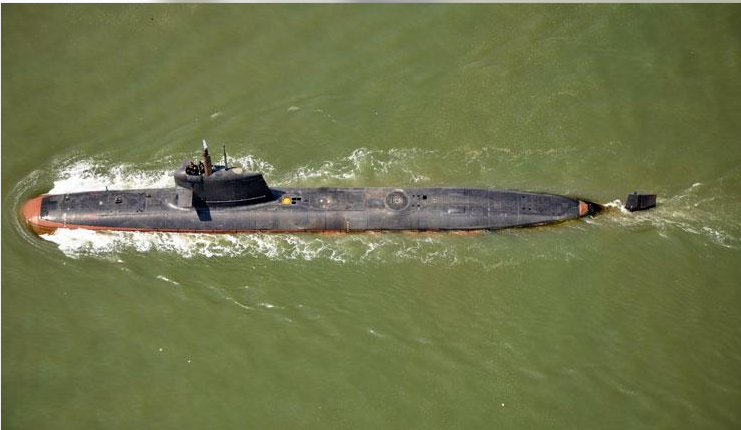
- Objective: Construction of 6 advanced conventional submarines.
- Technology: Diesel-electric propulsion with AIP.
- Indian partner: Mazagon Dock Shipbuilders Limited (MDL).
- Foreign partner: ThyssenKrupp Marine Systems (TKMS), Germany, in the proposed collaboration.
- Model: Strategic Partnership Model.
- Importance: Underwater endurance, stealth and indigenous submarine manufacturing.
Remember: Project 75 = Kalvari-class submarines; Project 75(I) = next-generation advanced submarines.
- AIP Technology – Air Independent Propulsion
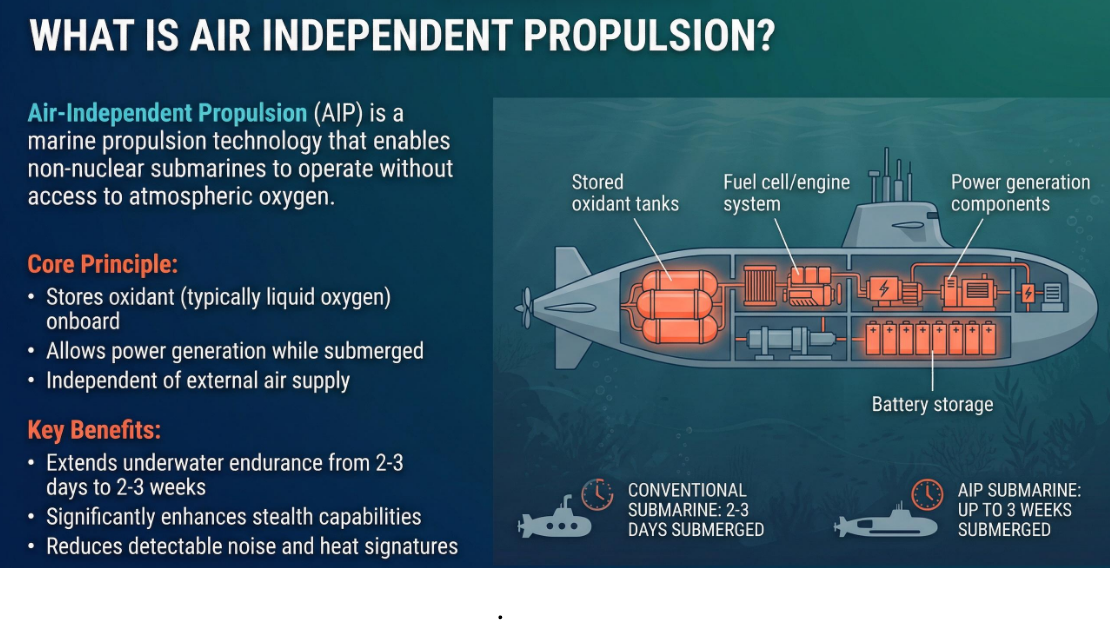
- Enables conventional submarines to remain underwater for longer periods.
- Reduces the need to surface or use a snorkel.
- India's indigenous AIP developed by DRDO – Naval Materials Research Laboratory (NMRL).
- Based on Phosphoric Acid Fuel Cell (PAFC) technology.
- Uses hydrogen and oxygen to generate electricity.
Chemical reaction:

- Advantages: Greater underwater endurance, stealth and survivability.
- Limitation: Does not provide unlimited endurance; unlike nuclear propulsion, it has limited power output.
- Project 17A – Nilgiri-Class Frigates
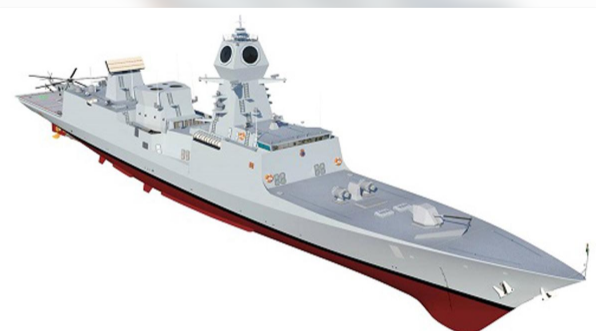
- Total: 7 stealth frigates.
- Successor: Project 17 Shivalik-class frigates.
- Shipyards: MDL Mumbai and GRSE Kolkata.
- Design: Indian Navy's Warship Design Bureau.
- Technology: Stealth design, advanced radar, sonar and missile systems.
- Propulsion: CODOG (Combined Diesel or Gas).
- Seven ships: Nilgiri, Himgiri, Taragiri, Udaygiri, Dunagiri, Mahendragiri and Vindhyagiri.
Importance: Anti-submarine warfare, air defence and multi-role naval operations.
- Project 18 – Next Generation Destroyers
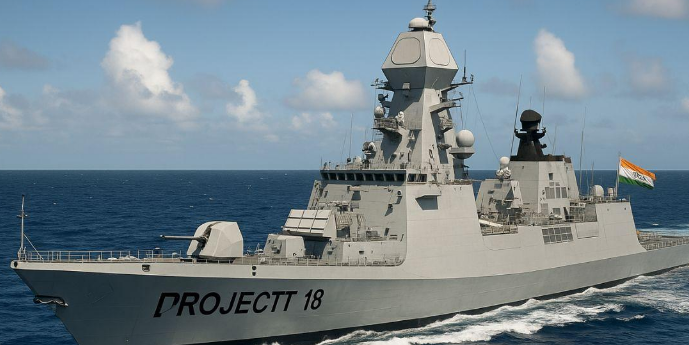
- Proposed next-generation guided-missile destroyer programme.
- Reported displacement: approximately 13,000 tonnes.
- Expected advanced technologies: AESA radar, VLS and integrated combat systems.
- Roles: Air defence, anti-submarine warfare, anti-surface warfare and fleet protection.
- Note: Project 18A is not verified as a separate officially announced programme. Avoid writing it as an established project.
| Project | Platform | Important feature |
|---|---|---|
| 75(I) | Submarine | AIP technology |
| AIP | Propulsion system | Longer underwater endurance |
| 17A | Frigate | Nilgiri-class stealth warship |
| 18 | Destroyer | Next-generation surface combatant |
Important Terms for Prelims
| Term | Full form |
|---|---|
| AIP | Air Independent Propulsion |
| PAFC | Phosphoric Acid Fuel Cell |
| DRDO | Defence Research and Development Organisation |
| NMRL | Naval Materials Research Laboratory |
| VLS | Vertical Launch System |
| AESA | Active Electronically Scanned Array |
| CODOG | Combined Diesel or Gas |
| ASW | Anti-Submarine Warfare |
UPSC Prelims Practice Question
Q. Consider the following pairs:
- Project 75(I) – Advanced conventional submarines
- Project 17A – Nilgiri-class frigates
- Project 18 – Next-generation destroyers
Which are correctly matched?
- A. 1 only
- B. 1 and 2 only
- C. 2 and 3 only
- D. 1, 2 and 3
Jangchub Chortens
UPSC Relevance: Prelims Pointers
Why in News?
Bhutan raised 108 Jangchub Chortens simultaneously on 1 November 2026 at Gelephu Mindfulness City, along the Mau Chhu River. Around 40,000 volunteers participated in the initiative.

Important Facts
| Feature | Details |
|---|---|
| Country | Bhutan |
| Project | Project 108 |
| Location | Gelephu Mindfulness City |
| River | Mau Chhu |
| Number | 108 Chortens |
| Height | 15 metres each |
| Spacing | 108 metres apart |
| Initiative | King Jigme Khesar Namgyel Wangchuck |
| Date | 1 November 2026 |
What is a Jangchub Chorten?
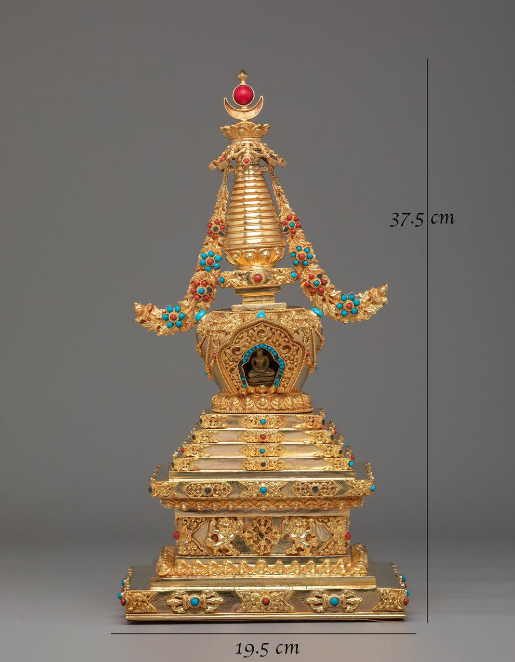
- Jangchub means Enlightenment (Bodhi) in Tibetan.
- Chorten is the Tibetan term for a Buddhist Stupa.
- A Jangchub Chorten commemorates the Buddha's attainment of enlightenment.
- It is one of the eight traditional types of Buddhist stupas.
- Chortens are sacred structures containing relics, prayers, mantras and religious texts.
Architectural Features and Symbolism

| Component | Symbolism |
|---|---|
| Thri (Pedestal) | Earth element |
| Bangrim (Stepped base) | Four Noble Truths |
| Bum-pa (Dome) | Buddha's pure body; holds relics |
| Lhakhang (Niche) | Image of Buddha |
| Khorlo (13 rings) | Stages towards Buddhahood |
| Dhug (Parasol) | Spiritual protection |
| Nyim-da (Sun, Moon and Flame) | Compassion and wisdom |
Significance of Number 108
- 108 beads are traditionally used in Buddhist prayer malas.
- Buddhist tradition recognises 108 volumes of the Kangyur.
- The number 108 also has significance in Hindu traditions, including the traditional count of Upanishads.
India–Bhutan connection: Relics enshrined in the chortens have been received from several countries, including India. The project highlights the shared Buddhist heritage of India and Bhutan.
UPSC Prelims Practice MCQ
Q. With reference to Jangchub Chortens, consider the following statements:
- They are Buddhist stupas associated with the attainment of enlightenment.
- Project 108 is located in Bhutan's Gelephu Mindfulness City.
- The Mau Chhu River is associated with this project.
- Chortens are a form of Islamic religious architecture.
Which of the statements given above are correct?
- A. 1 and 2 only
- B. 1, 2 and 3 only
- C. 2, 3 and 4 only
- D. 1, 2, 3 and 4
Matua Community
UPSC Relevance: Prelims Pointers
Who are the Matuas?

- The Matua community is a Bengali Hindu socio-religious community, primarily associated with the Namasudra (Scheduled Caste) community.
- It originated in 19th-century East Bengal, now Bangladesh.
- The movement emerged against caste discrimination, untouchability and social exclusion.
- A significant section migrated to West Bengal after the Partition of 1947 and the creation of Bangladesh in 1971.
Founders and Historical Background
| Personality | Contribution |
|---|---|
| Harichand Thakur (1812–1878) | Founder of the Matua religious movement |
| Guruchand Thakur (1847–1937) | Expanded the movement; promoted education and social reform |
| Pramatha Ranjan Thakur | Played an important role in organising the community politically |

Religious and Social Principles
- Equality and opposition to caste discrimination.
- Devotion to Hari (God) through prayer, Kirtan and Bhakti.
- Rejection of caste-based hierarchy and excessive ritualism.
- Promotion of dignity of labour, education and social equality.
- Support for women's equality and widow remarriage.
Geographical Distribution
| Area | Importance |
|---|---|
| North 24 Parganas, West Bengal | Major concentration; Thakurnagar is an important centre |
| Nadia, West Bengal | Significant Matua population |
| Gopalganj, Bangladesh | Historical origin; Orakandi is a major pilgrimage centre |
| Other regions | Assam, Tripura and other refugee-settlement areas |
Matua Community and CAA, 2019
- The Citizenship Amendment Act (CAA), 2019 is important for many Matua families because of their migration history.
- CAA provides an eligibility pathway for citizenship to specified communities belonging to Hindu, Sikh, Buddhist, Jain, Parsi and Christian religions from Afghanistan, Bangladesh and Pakistan.
- It applies to those who entered India on or before 31 December 2014, subject to statutory conditions.
- It reduces the naturalisation residence requirement from 11 years to 5 years for the specified groups.
- Many Matua refugees from Bangladesh view the Act as a possible route to securing citizenship.
UPSC Prelims Practice MCQ
Q. With reference to the Matua community, consider the following statements:
- The Matua movement originated in 19th-century East Bengal.
- Harichand Thakur is regarded as its founder.
- Guruchand Thakur promoted education and social reform.
- Orakandi, an important Matua religious centre, is located in West Bengal.
Which of the statements given above are correct?
- A. 1 and 2 only
- B. 1, 2 and 3 only
- C. 2, 3 and 4 only
- D. 1, 2, 3 and 4