
28 October 2026
6 topics in this edition
Daily Current Affairs - 28th OCT 2026
“New Delhi’s ‘Balancing Act’ Risks Eroding Russia’s Trust”
UPSC RELEVANCE: GS Paper II- International Relations
Context
- The editorial examines whether India's attempt to maintain relations with both Western powers and Russia is creating doubts in Moscow about India's reliability as a strategic partner. Its central concern is the tension between strategic autonomy, diplomatic consistency and India's long-standing relationship with Russia.
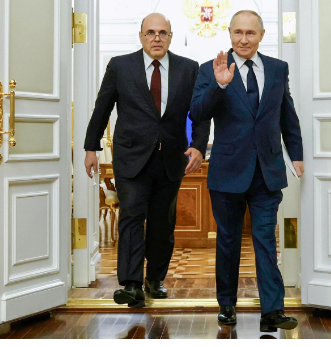
Background: What happened?
The editorial focuses on two important diplomatic events in 2026:
- Shanghai Cooperation Organisation (SCO) Summit: Held in Bishkek, Kyrgyzstan, on August 31–September 1.
- BRICS Summit: Held in New Delhi on September 12–13.
According to the available report, India's position on two conflicts became particularly significant:
- The US–Israel war against Iran.
- Russia's war in Ukraine.
India's diplomatic approach at these summits raised questions about how it balances relations with Russia, the United States and other global powers.
Key arguments
- India's changing diplomatic position- India has traditionally attempted to maintain friendly relations with both Western countries and non-Western powers.
Prime Minister Narendra Modi also publicly urged Russian President Vladimir Putin to end the war in Ukraine. It may reflect India's independent foreign policy, but they can also create diplomatic difficulties.
B. Why could Russia lose trust in India?
- Russia values India as a major partner in defence, energy and international diplomacy.
- The editorial's central concern is that diplomatic balancing could become counterproductive if it weakens mutual trust.
C. India's relationship with the United States
- India also has important interests in maintaining relations with the United States. However, strengthening relations with Washington while preserving a dependable partnership with Moscow requires careful diplomacy.
D. The challenge of strategic autonomy
- The challenge is that strategic autonomy requires more than avoiding formal alliances. It also requires consistent communication, credible commitments and the ability to explain decisions to different partners.
Why are India–Russia relations important?
| Area | Importance for India |
|---|---|
| Defence | Long-standing defence cooperation and maintenance of existing military equipment |
| Energy | Access to Russian oil and other energy resources |
| Nuclear energy | Cooperation in civilian nuclear energy |
| Eurasian diplomacy | Engagement with Russia on regional and international issues |
| Multilateral organisations | Cooperation through BRICS and the SCO |
| Multipolar world order | Support for a global order in which power is distributed among several major centres |
- India has also diversified its defence procurement towards countries such as France, Israel and the United States. This reduces excessive dependence on any single supplier but may also change the traditional character of India–Russia defence ties
Major challenges for India
- Balancing Russia and the West: India must maintain cooperation with both sides despite their geopolitical disagreements.
- Defence dependence: Diversification is important, but India must also ensure the reliability of existing Russian-origin military equipment and supply chains.
- Energy security: India must consider affordability, availability and the risks associated with international sanctions.
- China's influence: Russia's growing relationship with China complicates India's Eurasian diplomacy.
- Diplomatic credibility: India must explain its positions clearly so that independent decisions are not automatically interpreted as hostility towards a partner.
- A changing world order: Conflicts in Europe and West Asia make it increasingly difficult for India to maintain equally productive relations with competing powers.
Way forward
What should India do?
- Maintain strategic autonomy: Base decisions on India's national interests rather than external pressure.
- Strengthen diplomatic communication: Explain its positions directly to Russia, the United States and other partners.
- Avoid unnecessary public confrontation: Use dialogue and diplomatic channels to manage disagreements.
- Diversify defence procurement: Reduce excessive dependence on one supplier while ensuring the readiness of existing equipment.
- Protect energy security: Evaluate energy purchases according to national needs, commercial considerations and applicable international obligations.
- Strengthen multilateral diplomacy: Use BRICS, the SCO, the G20 and the United Nations to promote dialogue.
- Remain consistent on international principles: Support peaceful settlement of disputes and respect for international law.
The objective should not be to choose between Russia and the West, but to preserve India's freedom to cooperate with both where its interests permit.
SCO vs BRICS
| Feature | SCO | BRICS |
|---|---|---|
| Main focus | Regional security, political cooperation and economic cooperation | Economic cooperation, development and reform of global governance |
| India's participation | Full member | Founding member of the original grouping |
| Relevance to the editorial | Eurasian diplomacy and security | Multipolarity and cooperation among emerging economies |
UPSC Mains question
Q. “India's pursuit of strategic autonomy requires balancing competing geopolitical interests without undermining the credibility of its partnerships.” Discuss in the context of India–Russia and India–United States relations.
UPSC Prelims
Q. Consider the following statements about strategic autonomy:
- It allows a country to make independent foreign-policy decisions.
- It necessarily requires avoiding cooperation with major powers.
- It can involve maintaining relations with competing geopolitical blocs.
Which statements are correct?
| A. 1 only | B. 1 and 2 only |
|---|---|
| C. 1 and 3 only | D. 1, 2 and 3 |
SC Collegium Recommends 4 Judges as High Court Chief Justices
WHY IN NEWS?
The Supreme Court Collegium has recommended four judges for appointment as Chief Justices of High Courts.

CONSTITUTIONAL PROVISIONS
| Article | Provision |
|---|---|
| Article 214 | High Court for each State |
| Article 215 | High Court as a Court of Record |
| Article 216 | Constitution of High Courts |
| Article 217 | Appointment and conditions of office of High Court judges |
| Article 219 | Oath or affirmation by High Court judges |
| Article 222 | Transfer of High Court judges |
| Article 223 | Acting Chief Justice of a High Court |
| Article 226 | Power of High Courts to issue writs |
| Article 227 | Superintendence over subordinate courts and tribunals |
APPOINTMENT OF HIGH COURT CHIEF JUSTICE
- Constitutional basis: Article 217
- Appointing authority: President of India.
- Appointment instrument: Warrant under the President's hand and seal.
- Consultation: Chief Justice of India and other constitutionally specified authorities, as applicable.
- Recommendation mechanism: Supreme Court Collegium.
- Oath: Article 219.
- Retirement age: 62 years.
Eligibility for a High Court judge:
- Citizen of India.
- At least 10 years in judicial office in India; OR
- At least 10 years as an advocate of a High Court or qualifying High Courts in succession.
COLLEGIUM SYSTEM
- Meaning: A system developed through Supreme Court judgments for recommending appointments and transfers of judges in the higher judiciary.
- Important: The term Collegium is not expressly mentioned in the Constitution.
| Appointment - Collegium composition |
|---|
| Supreme Court judges - CJI + 4 senior-most Supreme Court judges |
| High Court judges - CJI + 2 senior-most Supreme Court judges |
| The Supreme Court Collegium recommends candidates for appointment as High Court Chief Justices. |
THREE JUDGES CASES
| Case | Year | Significance |
|---|---|---|
| First Judges Case — S.P. Gupta v. Union of India | 1981 | Favoured Executive primacy |
| Second Judges Case | 1993 | Established judicial primacy and the Collegium System |
| Third Judges Case | 1998 | Clarified Collegium composition and consultation |
NJAC (National Judicial Appointments Commission):
- Introduced through the 99th Constitutional Amendment Act, 2014.
- Intended to replace the Collegium System.
- Struck down by the Supreme Court in 2015.
- Judicial independence was central to the judgment.
CHIEF JUSTICE VS ACTING CHIEF JUSTICE
| Chief Justice | Acting Chief Justice |
|---|---|
| Article 217 | Article 223 |
| Regular appointment | Temporary arrangement |
| Heads the High Court | Performs duties during a vacancy or inability of the Chief Justice |
ISSUES ASSOCIATED WITH THE COLLEGIUM SYSTEM
Advantages
- Protects judicial independence.
- Reduces direct political interference.
- Involves senior judges in assessing judicial suitability.
Concerns
- Limited transparency.
- Questions regarding accountability and selection criteria.
- Delays in judicial appointments.
- Need for greater diversity in the judiciary.
Way Forward: Transparent selection criteria, timely appointments, greater accountability and protection of judicial independence.
UPSC PRELIMS PRACTICE QUESTION
Q. Consider the following statements regarding the Collegium System:
- The Collegium System is expressly mentioned in the Constitution.
- Article 217 deals with the appointment of High Court judges.
- Article 222 deals with the transfer of High Court judges.
- The NJAC was struck down by the Supreme Court in 2015.
Which of the statements given above are correct?
| (A) 1 and 2 only | (B) 2 and 3 only |
|---|---|
| (C) 2, 3 and 4 only | (D) 1, 2, 3 and 4 |
KERALA INFRASTRUCTURE INVESTMENT FUND BOARD (KIIFB)
- GS Paper III: Economy | GS Paper II: Governance & Federalism

WHY IS IN NEWS?
- A committee headed by former senior bureaucrat Sudha Pillai recommended major changes to its functioning, including stopping fresh market borrowings and transferring ongoing projects to government departments.
ABOUT KIIFB
| Feature Details |
|---|
| Full form - Kerala Infrastructure Investment Fund Board |
| Establishment - 11 November 1999 |
| Legal basis - Kerala Infrastructure Investment Fund Act, 1999 |
| Nature - Statutory body corporate |
| State - Kerala |
| Administrative department - Finance Department, Government of Kerala |
| Chairperson - Chief Minister of Kerala |
| Vice-Chairperson - State Finance Minister |
| Major objective - Mobilisation of funds for large infrastructure projects |
| Major reform - Kerala Infrastructure Investment (Amendment) Act, 2016 |
| KIIFB was established to mobilise and channel funds for major public infrastructure projects. Its role expanded significantly after the 2016 amendment. |
OBJECTIVES AND FUNCTIONS
Major functions of KIIFB:
- Resource mobilisation: Raises funds to support major infrastructure projects.
- Project financing: Provides financial support for large public infrastructure projects.
- Project appraisal: Scrutinises and assesses proposed projects.
- Infrastructure development: Supports physical and social infrastructure.
- Land acquisition: Helps finance land acquisition required for major projects.
- Financial consultancy: Assists government departments with financial planning and related advice.
- Project implementation support: Works with government departments and public-sector agencies, including through Special Purpose Vehicles (SPVs).
KIIFB's official objectives include funding projects in transport, energy, water and sanitation, social infrastructure, commercial infrastructure, IT and telecommunications.
MAJOR PROJECTS ASSOCIATED WITH KIIFB
| Project Sector | Significance |
|---|---|
| Coastal Highway | Transport and coastal connectivity |
| Hill Highway | Road connectivity across hilly regions |
| Kerala Fibre Optic Network (KFON) | Digital connectivity |
| Transgrid 2.0 | Electricity transmission infrastructure |
| Petrochemical and Pharma Park, Kochi | Industrial development |
| Life Science Park, Thiruvananthapuram | Healthcare, biotechnology and related industries |
WHAT DID THE SUDHA PILLAI COMMITTEE RECOMMEND?
| Recommendation | Purpose |
|---|---|
| Stop fresh market borrowings by KIIFB | Reduce additional debt accumulation |
| Stop funding new projects through KIIFB | Shift infrastructure financing to regular budgetary channels |
| Transfer ongoing projects to government departments | Integrate implementation with departmental responsibilities |
| Stop dedicated transfers of motor vehicle tax and petroleum cess to KIIFB | Reduce earmarking of state revenues |
| Complete existing projects through budgetary allocations over five years, beginning in 2026–27 | Ensure completion of ongoing works |
| Conduct a performance audit by the CAG | Strengthen financial accountability |
MAJOR CONCERNS
- Off-budget borrowing- Off-budget borrowing occurs when a government-supported entity borrows to finance expenditure that would otherwise be undertaken directly through the government budget.
- Concern: Such borrowing can make the State's overall financial obligations less transparent.
- State borrowing limits- The committee reported that the Union Government had counted KIIFB's borrowings against Kerala's borrowing space.
- Constitutional relevance: Article 293
- Article 293 deals with the borrowing powers of States.
- Article 293(3) provides for Union Government consent in specified circumstances when a State indebted to the Union seeks to raise a loan.
- Debt-servicing burden- the committee argued that transfers from state revenues were being used substantially to service KIIFB's debt, raising questions about the net amount available for new infrastructure.
- Higher borrowing costs- According to the committee's assessment, KIIFB borrowed at higher rates than the State Government could obtain through its own market borrowings.
- Accountability and oversight- The committee raised concerns about budgetary scrutiny, financial management and the relationship between KIIFB and government departments.
WAY FORWARD
- Make government-supported borrowing and liabilities transparent in public accounts.
- Assess the long-term repayment capacity of infrastructure financing institutions.
- Strengthen CAG and legislative scrutiny.
- Improve coordination between finance departments and implementing agencies.
- Complete ongoing projects while protecting essential public services.
- Balance infrastructure investment with fiscal sustainability.
PRELIMS PRACTICE QUESTION
Q. Consider the following statements regarding the Kerala Infrastructure Investment Fund Board (KIIFB):
- It was established under the Kerala Infrastructure Investment Fund Act, 1999.
- It supports infrastructure financing in Kerala.
- Article 293 of the Constitution deals with borrowing by States.
- The term off-budget borrowing refers only to borrowing undertaken directly by the Union Government.
Which of the statements given above are correct?
| (A) 1 and 2 only | (B) 1, 2 and 3 only |
|---|---|
| (C) 2, 3 and 4 only | (D) 1, 2, 3 and 4 |
MAINS PRACTICE QUESTION
Q.“Innovative infrastructure financing can accelerate economic development, but inadequate fiscal transparency may create long-term liabilities for State Governments.” Discuss.
India Invites Pakistani Minister to SCO Civilizational Dialogue Forum
WHY IS IN NEWS?
- India has invited Pakistan’s Minister to attend the inaugural Shanghai Cooperation Organization (SCO) civilizational Dialogue Forum in New Delhi from 20–22 November 2026.
ABOUT THE SCO CIVILISATIONAL DIALOGUE FORUM

| Feature | Details |
|---|---|
| Full name | Shanghai Cooperation Organisation Civilisational Dialogue Forum |
| Host country | India |
| Venue | New Delhi; Purana Qila |
| Dates | 20–22 November 2026 |
| Initiative proposed by | Prime Minister Narendra Modi |
| Proposed at | SCO Summit, Tianjin, China, in September 2025 |
| Main objective | Promote civilisational understanding, cultural cooperation and people-to-people contacts |
| Organisers | Ministry of Culture and Ministry of External Affairs |
- The forum aims to promote cultural exchanges, shared heritage, art, literature and traditions among SCO countries and partner states.
3. WHAT IS THE SHANGHAI COOPERATION ORGANISATION (SCO)?
- The SCO is a Eurasian regional organisation that promotes cooperation in security, economic development, connectivity and cultural relations.
| Feature | Important facts |
|---|---|
| Established | 2001 |
| Origin | Shanghai Five mechanism, established in 1996 |
| Founding members in 2001 | China, Russia, Kazakhstan, Kyrgyzstan, Tajikistan and Uzbekistan |
| Headquarters | Beijing, China |
| India became a full member | 2017 |
| Pakistan became a full member | 2017 |
| Current membership | 10 countries |
Current SCO Member States
| 1. China | 2. Russia | 3. India | 4. Pakistan |
|---|---|---|---|
| 5. Kazakhstan | 6. Kyrgyzstan | 7. Tajikistan | 8. Uzbekistan |
| 9. Iran | 10. Belarus |
Prelims fact: India and Pakistan became full members of the SCO in 2017.
OBJECTIVES OF THE SCO
- Regional security: Cooperation against terrorism, separatism and extremism.
- Economic cooperation: Promote trade, investment and economic development.
- Connectivity: Improve regional transport and economic links.
- Cultural cooperation: Encourage exchanges among different civilisations and societies.
- Regional stability: Build mutual trust and cooperation among member states.
- The SCO's security cooperation is particularly relevant to India's concerns regarding cross-border terrorism.
WHY IS INDIA INVITING PAKISTAN DESPITE TENSIONS?
- Multilateral obligations- India has invited all SCO members to participate in the forum. The invitation to Pakistan is part of this multilateral engagement rather than necessarily a change in bilateral policy. Hindustan Times
- Cultural diplomacy- The forum provides an opportunity to promote dialogue through shared history, heritage, art and cultural traditions.
- Regional cooperation- India and Pakistan are both members of the SCO. Participation in multilateral forums creates opportunities to address regional issues even when bilateral relations are strained.
- Diplomatic engagement without normalization- Participation in an international organisation does not automatically mean that two countries have normalised their bilateral relations.
INDIA–PAKISTAN RELATIONS
| Event | Significance |
|---|---|
| Pathankot attack, 2016 | Contributed to deterioration in bilateral relations |
| Uri attack, 2016 | Further strained relations |
| SCO membership, 2017 | India and Pakistan became full members |
| Bilawal Bhutto's visit to Goa, 2023 | Attended the SCO Foreign Ministers' Meeting |
| S. Jaishankar's visit to Islamabad, 2024 | Attended the SCO Council of Heads of Government meeting |
| Pahalgam attack and Operation Sindoor, 2025 | Sharply increased tensions |
| SCO Civilisational Dialogue invitation, October 2026 | Continued multilateral engagement despite bilateral tensions |
SIGNIFICANCE FOR INDIA
Opportunities
- Strengthens India's role in regional diplomacy.
- Promotes cultural exchanges and people-to-people contacts.
- Allows India to maintain engagement with Eurasian countries.
- Provides a platform for discussing shared regional concerns.
Challenges
- Persistent India–Pakistan tensions.
- Cross-border terrorism and security concerns.
- Differences among SCO members over regional and international issues.
- The difficulty of separating cultural cooperation from wider geopolitical tensions.
WAY FORWARD
- Maintain a firm and consistent position against terrorism.
- Use multilateral forums to promote regional cooperation.
- Encourage cultural and educational exchanges.
- Separate practical multilateral cooperation from expectations of immediate bilateral normalisation.
- Strengthen connectivity and economic cooperation where mutually beneficial and consistent with India's security interests.
PRELIMS PRACTICE QUESTION
Q. Consider the following statements about the Shanghai Cooperation Organisation:
- India became a full member in 2017.
- Pakistan became a full member in 2017.
- The SCO was established in 2001.
- Its headquarters is located in New Delhi.
Which of the statements are correct?
| (A) 1 and 2 only | (B) 1, 2 and 3 only |
|---|---|
| (C) 2, 3 and 4 onl | (D) 1, 2, 3 and 4 |
GM CROPS
- UPSC RELEVANCE: GS Paper III: Science & Technology | PRELIMS

Why in News?
- Nobel laureate Richard J. Roberts (1993) advocated developing GM crops through indigenous research in India. He received the Nobel Prize for the discovery of split genes, not for GM-crop research.
What are GM Crops?
- Genetically Modified (GM) crops are plants whose DNA is altered using genetic engineering to introduce desirable traits.
- Examples: Bt cotton, Bt brinjal, Golden Rice and GM mustard.
Technology used
- Recombinant DNA technology: Introduces or modifies genetic material.
- Agrobacterium-mediated transformation: Transfers genetic material into plant cells.
- Gene gun: Delivers DNA into plant cells using microscopic particles.
- CRISPR-Cas9: Enables targeted genome editing.
GM Crops in India
| Crop | Key fact |
|---|---|
| Bt cotton | Approved for commercial cultivation in 2002; India's principal commercially cultivated GM crop |
| Bt brinjal | Commercial release placed under a moratorium in 2010 |
| GM mustard (DMH-11) | Environmental release approved by GEAC in 2022; its legal status requires checking against subsequent court orders |
Regulatory Framework
- GEAC: Genetic Engineering Appraisal Committee, under MoEFCC.
- Legal basis: Environment (Protection) Act, 1986, and Rules, 1989.
- Genome editing: Certain SDN-1 and SDN-2 plants without foreign DNA were exempted from specified biosafety assessment requirements in 2022.
Benefits
- Potential reduction in pest-related crop losses.
- Improved nutritional quality.
- Potential drought and disease resistance.
- Support for agricultural research and food security.
- Potential reduction in edible-oil import dependence.
Concerns
- Possible effects on biodiversity and non-target organisms.
- Development of pest and weed resistance.
- Seed affordability and corporate dependence.
- Need for rigorous food and environmental safety assessment.
Way Forward
- Promote indigenous biotechnology research, transparent regulation, independent biosafety testing, environmental monitoring and protection of farmers' interests.
UPSC Prelims Practice Questions
Q. With reference to Bt cotton, consider the following statements:
- It uses genes derived from Bacillus thuringiensis.
- It is designed to protect against certain insect pests.
- It is India's only GM crop approved for commercial cultivation according to the cited government information.
Which statements are correct?
| A. 1 only | B. 1 and 2 only |
|---|---|
| C. 2 and 3 only | D. 1, 2 and 3 |