
30 October 2026
6 topics in this edition
30th October 2026 News
30th October 2026 News
The Hindu Editorial: “A Security Deal, but Not the End of the Arctic Contest”
UPSC RELEVANCE: GS I | GS II
Context
A trilateral security agreement signed on 22 September 2026 by the United States, Denmark and Greenland expands the American military presence in Greenland while reaffirming Danish sovereignty and Greenland’s right to self-determination.
Background: Why Is Greenland Strategically Important?
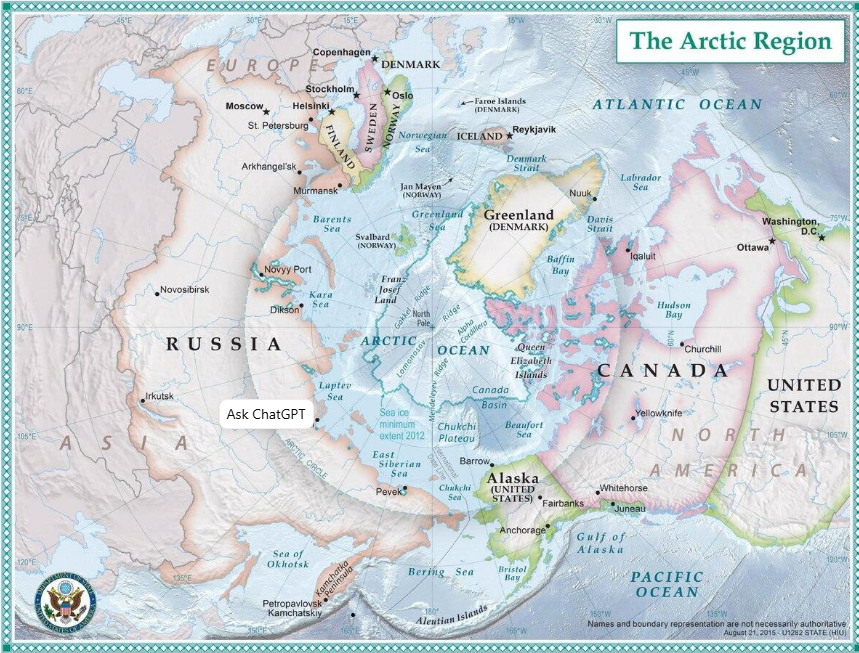
Greenland is the world's largest island and an autonomous territory within the Kingdom of Denmark. Its geographical position between North America and Europe makes it strategically important for military surveillance, missile warning and North Atlantic security.
| Factor | Strategic importance |
|---|---|
| Geographic location | Lies between North America and Europe, near important North Atlantic routes |
| Military significance | Supports early-warning systems, space surveillance and defence infrastructure |
| Natural resources | Potential deposits of critical minerals and other natural resources |
| Emerging sea routes | Declining sea ice is changing the accessibility of Arctic shipping routes |
| Great-power rivalry | The United States, Russia and China have competing strategic and economic interests in the wider Arctic. |
Key Provisions of the 2026 Security Agreement
The agreement supplements the existing 1951 U.S.–Denmark defence agreement on Greenland. Its major provisions include:
| Provision | Details |
|---|---|
| Expansion of U.S. military presence | Modernisation and expansion of activities at Pituffik Space Base |
| Additional defence areas | Proposed sites at Narsarsuaq and Mestersvig |
| Missile defence | Provides a framework for cooperation that includes the proposed U.S. Golden Dome defence system |
| Military access | Broad access for U.S. aircraft and vessels, subject to the agreement's provisions |
| Restrictions on non-NATO military presence | Non-NATO states cannot establish military installations or maintain a persistent military presence in Greenland unless the parties agree otherwise |
| Investment screening | Restricts certain investments by non-NATO, non-EU and other specified states in sensitive sectors |
| Sovereignty | Reaffirms the sovereignty and territorial integrity of the Kingdom of Denmark and Greenland's right to self-determination |
| Duration | Has no fixed end date and can be amended only by mutual consent |
Important: The agreement does not transfer sovereignty over Greenland to the United States. It expands American defence access and influence while retaining the formal sovereignty framework.
Why Does the Arctic Contest Continue?
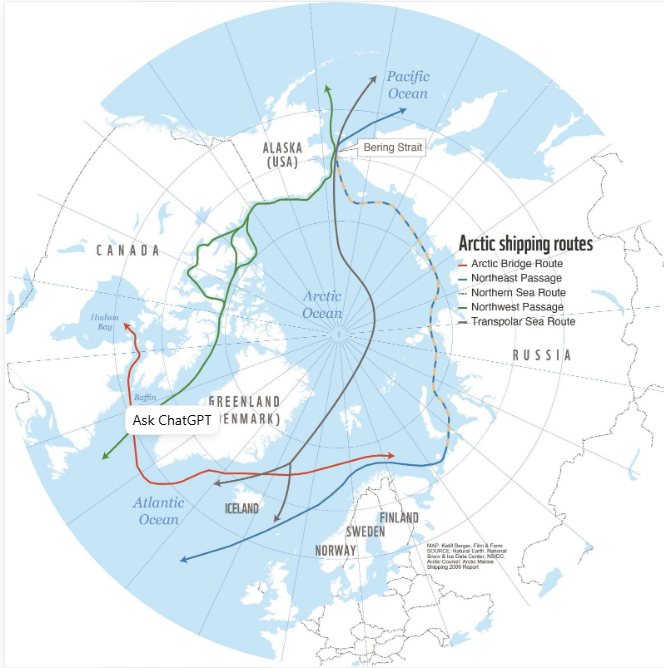
- U.S.–Russia strategic rivalry- Russia maintains significant military infrastructure in the Arctic. Its geographical position, military capabilities and Arctic shipping interests make it a major strategic actor.
- China's growing interests- It describes itself as a near-Arctic state, although it is not an Arctic littoral country.
- NATO's northern security- The Arctic and North Atlantic are important to NATO's defence planning. Military surveillance, submarine activity, air defence and maritime security are central concerns.
- Competition over natural resources- Access to these resources is affected by environmental conditions, infrastructure, investment and geopolitical tensions.
- New shipping routes- Melting sea ice may increase the seasonal accessibility of routes such as the Northern Sea Route.
- Greenland's self-determination- Security arrangements must therefore balance the interests of the United States and Denmark with Greenlandic political rights and local interests.
What Does the Deal Achieve?
Positive outcomes
- May ease immediate diplomatic tensions between the United States and Denmark.
- Strengthens defence coordination within NATO.
- Provides a framework for expanded military surveillance and deterrence.
- Recognises Greenland's right to self-determination.
- May increase investment and employment associated with defence infrastructure, subject to implementation.
Concerns
- Expanded U.S. military access could increase strategic competition with Russia and China.
- Restrictions on third-country military presence and investment could deepen geopolitical divisions.
- Greater militarisation may increase the risk of miscalculation.
- Greenland's local communities need meaningful consultation and tangible economic benefits.
- Environmental protection must be considered alongside military and resource-development priorities.
Implications for India
India is not an Arctic littoral state, but the region matters to its scientific, economic and strategic interests.
- Scientific research: India has maintained a research presence in the Arctic through its Himadri research station at Ny-Ålesund, Svalbard.
- Climate change: Arctic warming affects global climate systems and has implications for weather patterns, sea levels and ecosystems.
- Energy security: Developments in Arctic energy production and shipping can influence global energy markets.
- Strategic autonomy: India must assess Arctic developments without automatically aligning itself with any single power.
- International cooperation: India can support peaceful scientific cooperation, environmental protection and respect for international law.
India's Arctic Policy, released in 2022, provides a framework for scientific research, environmental monitoring, international cooperation and sustainable development.
Way Forward
- Strengthen confidence-building measures and military communication channels.
- Use NATO and other diplomatic mechanisms to reduce the risk of confrontation.
- Respect Greenland's political rights and ensure meaningful local consultation.
- Promote scientific cooperation and transparent environmental monitoring.
- Balance security objectives with sustainable economic development.
- Support peaceful resolution of disputes under international law.
UPSC Mains Practice Question
Q. “Security agreements may ease immediate diplomatic tensions but cannot eliminate great-power competition.” Critically Analyse.
UPSC Prelims Practice Question
Q. Consider the following statements about Greenland:
- Greenland is an autonomous territory within the Kingdom of Denmark.
- Greenland is strategically important because of its location between North America and Europe.
- Greenland is a sovereign member of NATO independent of Denmark.
Which of the statements given above are correct?
(A) 1 and 2 only
(B) 2 and 3 only
(C) 1 and 3 only
(D) 1, 2 and 3
13th ADMM-Plus 2026
UPSC RELEVANCE: GS II: IR | PRELIMS
Why in News?
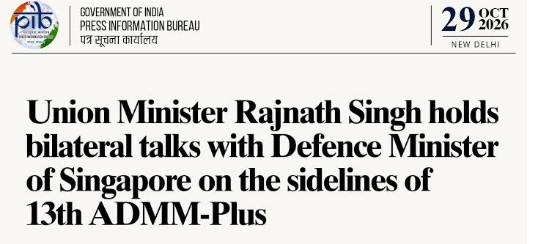
The 13th ASEAN Defence Ministers’ Meeting-Plus (ADMM-Plus) was held in Cebu, Philippines, on 28–29 October 2026. India's Defence Minister, Rajnath Singh, represented India at the meeting.
He also proposed an India–ASEAN Defence Youth Bridge to strengthen people-to-people connections, digital innovation and capacity building.
What Is ADMM-Plus?
The ASEAN Defence Ministers’ Meeting-Plus is a multilateral platform that brings together ASEAN members and eight external dialogue partners to promote defence cooperation, regional stability and mutual trust.
- Established: 2010
- First meeting: Hanoi, Vietnam, on 12 October 2010
- Frequency: Annual ministerial meetings since 2017
- Chair for 2026: Philippines
- Purpose: Defence dialogue, capacity building and cooperation on shared security challenges.
- Theme(2026): “Navigating Our Future, Together.”
Membership
ADMM-Plus comprises 11 ASEAN members + 8 dialogue partners countries.
| ASEAN Member States | Eight Dialogue Partners |
|---|---|
| Brunei | India |
| Cambodia | United States |
| Indonesia | China |
| Laos | Russia |
| Malaysia | Japan |
| Myanmar | South Korea |
| Philippines | Australia |
| Singapore | New Zealand |
| Thailand | |
| Timor-Leste | |
| Vietnam |
Prelims fact: India became an ASEAN dialogue partner in 1992.
Seven Areas of Cooperation
ADMM-Plus promotes practical cooperation through seven Experts’ Working Groups (EWGs).
| No. | Area | Main objective |
|---|---|---|
| 1 | Maritime Security | Maritime cooperation and regional sea-lane security |
| 2 | Counter-Terrorism | Combating terrorism through training and information sharing |
| 3 | Humanitarian Assistance and Disaster Relief (HADR) | Coordinated disaster response |
| 4 | Peacekeeping Operations | Strengthening peacekeeping capabilities |
| 5 | Military Medicine | Medical cooperation and military healthcare |
| 6 | Humanitarian Mine Action | Safe removal of landmines and explosive remnants |
| 7 | Cyber Security | Cooperation against cyber threats |
India's role
India and Malaysia co-chair the Experts’ Working Group on Counter-Terrorism for 2024–2027. India can use this platform to share operational experience, improve interoperability and strengthen regional counter-terrorism capabilities.
Key Highlights of the 13th Meeting
A. Counter-terrorism cooperation-Rajnath Singh offered to share India's counter-terrorism experience through joint exercises, capacity-building programmes and intelligence sharing.
B. Maritime security- India reaffirmed its commitment to freedom of navigation and overflight under international law, particularly the United Nations Convention on the Law of the Sea (UNCLOS).
C. India–ASEAN Defence Youth Bridge- India proposed a defence-focused Youth Bridge to encourage:
- Exchanges and people-to-people connections
- Digital innovation
- Capacity building
- Youth engagement in peace and security
D. ASEAN centrality- India emphasised an open, inclusive, resilient and rules-based Indo-Pacific in which ASEAN remains central to regional cooperation. Press Information Bureau
Significance for India
- Act East Policy: Deepens India's strategic and defence engagement with Southeast Asia.
- Indo-Pacific security: Supports a stable regional order and secure maritime routes.
- Counter-terrorism: Strengthens cooperation against cross-border terrorism and violent extremism.
- Defence diplomacy: Creates opportunities for military exercises, training and information exchange.
- Strategic autonomy: Enables India to engage with the United States, China, Russia and other regional powers within a common forum.
- Disaster management: Improves coordination for humanitarian assistance and disaster relief.
Challenges
- Strategic rivalry between the United States and China.
- Tensions in the South China Sea.
- Differences in the security priorities of member countries.
- Cyber threats and transnational terrorism.
- Difficulty translating dialogue into sustained operational cooperation.
- Maintaining ASEAN centrality amid competing great-power interests.
Way Forward
- Expand joint exercises and military-to-military exchanges.
- Improve maritime domain awareness and information sharing.
- Strengthen cooperation on cyber security and counter-terrorism.
- Promote practical disaster-response coordination.
- Develop measurable programmes under the proposed Youth Bridge.
- Preserve ASEAN centrality and use dialogue to manage regional disputes.
UPSC Prelims Practice Question
Q. With reference to ADMM-Plus, consider the following statements:
- It was established in 2010.
- It includes ASEAN members and eight dialogue partners.
- India and Malaysia co-chair its Experts’ Working Group on Counter-Terrorism for 2024–2027.
- Its areas of cooperation include maritime security, military medicine and cyber security.
Which of the statements given above are correct?
(A) 1 and 2 only
(B) 1, 2 and 3 only
(C) 2, 3 and 4 only
(D) 1, 2, 3 and 4
Assessing the Outcome of MLC Elections
UPSC RELEVANCE: GS Paper II: State Legislature| PRELIMS
Context
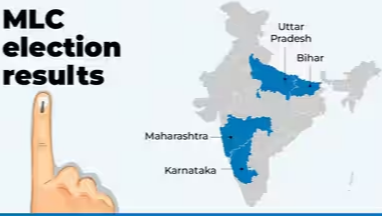
Recent MLC elections in Uttar Pradesh, Bihar, Maharashtra and Karnataka renewed discussion about how far Legislative Council election results reflect a party’s popularity.
What Is a State Legislature?
Under Article 168, a State Legislature consists of the Governor and one or two Houses, depending on the State.
| Type | Structure |
|---|---|
| Unicameral | Governor + Legislative Assembly (Vidhan Sabha) |
| Bicameral | Governor + Legislative Assembly + Legislative Council (Vidhan Parishad) |
Legislative Assembly vs Legislative Council
- Legislative Assembly: The Lower House; its members are called MLAs and are directly elected by voters.
- Legislative Council: The Upper House; its members are called MLCs and are selected through different electoral categories, with some nominated by the Governor.
The Council is a continuing House and is not dissolved as a whole. It reviews legislation and provides an additional forum for debate, but its powers are more limited than those of the Assembly in important matters.
Formation of the Legislative Council
Article 169 — Creation or abolition of a Legislative Council
A State does not create a Legislative Council simply by passing a State law. The Constitution provides a special procedure.
- 1.The State Legislative Assembly passes a resolution by:
- A majority of its total membership; and
- A majority of not less than two-thirds of members present and voting.
- Parliament passes a law to create or abolish the Council.
- The Council is created or abolished according to that law.
- Important: Parliament is not required to use the procedure under Article 368 for this purpose.
Composition of the Legislative Council
Under Article 171, MLCs enter the Council through five routes.
| Category | Share | Selection method |
|---|---|---|
| Local authorities | 1/3 | Elected by specified local-authority representatives |
| MLAs | 1/3 | Elected by State Legislative Assembly members |
| Graduates | 1/12 | Elected by eligible registered graduates |
| Teachers | 1/12 | Elected by eligible registered teachers |
| Governor's nominees | 1/6 | Nominated by the Governor |
The nominated members should have special knowledge or practical experience in literature, science, art, the cooperative movement or social service.
Other important facts
- A Council's maximum strength is one-third of the Assembly's strength.
- Its minimum strength is 40 members.
- An MLC's term is six years.
- One-third of the members retire every two years.
- The Council is a permanent House and cannot be dissolved as a whole.
- The minimum age for membership is 30 years.
Election of MLCs: Important Distinction
MLCs are not all elected directly by the general public.
- Assembly elections: Eligible voters elect MLAs directly.
- MLA quota: MLAs elect MLCs.
- Local-authority quota: Eligible local-authority representatives elect MLCs.
- Graduates' quota: Eligible registered graduates elect MLCs.
- Teachers' quota: Eligible registered teachers elect MLCs.
- Nominated quota: The Governor nominates members under Article 171.
- For the specified elected categories, the Constitution provides for Proportional Representation by means of the Single Transferable Vote.
- Graduates' and teachers' constituencies have specific eligibility and registration requirements. Not every graduate or teacher is automatically entitled to vote in these elections.
Legislative Council vs Legislative Assembly: Powers
The Legislative Council reviews legislation but does not have the same powers as the Assembly in every matter.
Ordinary Bills — Article 197
- The Council can suggest amendments and delay a Bill.
- It cannot permanently block an ordinary Bill when the Assembly follows the constitutional procedure.
Money Bills — Article 198
- A Money Bill can be introduced only in the Assembly.
- The Council can make recommendations but cannot amend or reject the Bill.
- It must return the Bill within 14 days.
Government formation
- The Council of Ministers is collectively responsible to the Legislative Assembly under Article 164(2).
- A majority in the Council alone cannot determine which party forms the State Government.
Legislative Councils in states
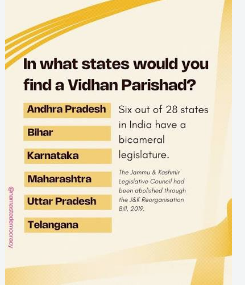
Arguments in favour of Councils
- Provides a second forum for reviewing legislation.
- Allows representation of teachers, graduates and local authorities.
- Can bring experienced individuals into legislative debates.
- May improve scrutiny of Bills.
Major concerns
- Additional expenditure on maintaining another House.
- Potential delays in the legislative process.
- Risk of political appointments being used to accommodate party members.
- Questions about whether the Council contributes enough to justify its cost.
Way Forward
- Interpret MLC election results according to the specific electorate involved.
- Improve voter registration and awareness in graduates' and teachers' constituencies.
- Strengthen the Council's role in legislative scrutiny and informed debate.
- Ensure nominations are based on the qualifications and fields specified in Article 171.
- Evaluate Legislative Councils on their contribution to democratic deliberation, rather than merely their political composition.
UPSC Prelims Practice Questions
Q. With reference to the Legislative Council of a State, consider the following statements:
- The Legislative Council is a permanent House.
- One-third of its members retire every two years.
- The term of every MLC is five years.
- Every State is constitutionally required to have a Legislative Council.
Which of the statements given above are correct?
- A. 1 and 2 only
- B. 1 and 3 only
- C. 2 and 4 only
- D. 1, 2 and 3 only
UPSC Mains Practice Questions
Q. Explain the constitutional procedure for the creation and abolition of a State Legislative Council. Why is Article 169 significant?
Raimona National Park
UPSC RELEVANCE: Prelims Pointer
Why in News?
A tigress relocated from Bihar's Valmiki Tiger Reserve to West Bengal's Buxa Tiger Reserve crossed the Sankosh River and entered Assam's Raimona National Park in October 2026. Forest officials are monitoring her movements.
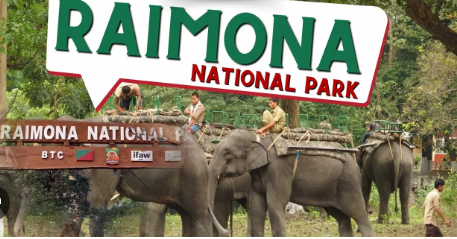
About Raimona National Park
| Feature | Details |
|---|---|
| Location | Kokrajhar district, Assam |
| Administrative region | Bodoland Territorial Region (BTR) |
| National Park status | Declared in June 2021 |
| Area | 422 sq. km |
| Forest division | Kachugaon Forest Division |
| Biogeographic setting | Foothills of the Eastern Himalayas |
| Flagship species | Golden langur |
| Conservation importance | Wildlife habitat and transboundary ecological connectivity |
The park is located in western Assam, close to the India–Bhutan border. It forms part of a transboundary conservation landscape connected with Bhutan's Phibsoo Wildlife Sanctuary and West Bengal's Buxa Tiger Reserve.
Why is Raimona important?
- Biodiversity hotspot: It supports a variety of mammals, birds, butterflies and plant species.
- Wildlife connectivity: It forms part of a transboundary forest landscape connecting Assam, West Bengal and Bhutan.
- Golden Langur conservation: The park protects an important habitat of this geographically restricted primate.
- Elephant and tiger movement: Connected forests allow wildlife to move between habitats, supporting genetic exchange and long-term population survival.
- Greater Manas landscape: Raimona contributes to conservation in the wider Manas region.
Important Biodiversity
Important species include:
- Golden langur — a flagship primate of the region.
- Bengal tiger
- Asian elephant
- Clouded leopard
- Gaur
- Several deer species
- Numerous butterflies and forest birds.
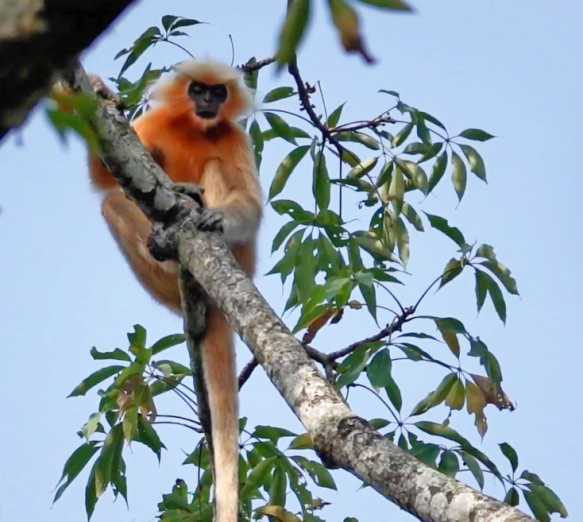
Golden Langur (Trachypithecus geei)
The Golden Langur, locally known as Sonali Bandar, is a rare Old World monkey found mainly in western Assam and neighbouring Bhutan.
Important facts
| Feature | Description |
|---|---|
| Scientific name | Trachypithecus geei |
| Common name | Golden Langur |
| Family | Cercopithecidae |
| Order | Primates |
| Distribution | Western Assam and southern Bhutan |
| Habitat | Subtropical and temperate broadleaf forests, moist deciduous forests and riverine forests |
| Lifestyle | Primarily arboreal |
| Diet | Mainly leaves, supplemented by fruits, flowers and other plant material |
| Social behaviour | Usually lives in social groups |
| IUCN Red List | Endangered |
| CITES | Appendix I |
| Indian legal protection | Schedule I of the Wild Life (Protection) Act, 1972 |
The species' restricted distribution and habitat fragmentation make its conservation particularly important.
Prelims Practice Question
Q. Consider the following statements about Raimona National Park:
- It is located in Assam's Kokrajhar district.
- It shares a transboundary forest landscape with Bhutan.
- It is an important habitat of the Golden Langur.
- The Sankosh River forms its eastern boundary.
Which of the statements given above are correct?
(A) 1 and 2 only
(B) 1, 2 and 3 only
(C) 2, 3 and 4 only
(D) 1, 2, 3 and 4
Kufri Jamunia: Biofortified Purple Potato
UPSC RELEVANCE: Prelims Pointer
Context
Kufri Jamunia, a nutrient-rich purple potato variety was developed by the ICAR–Central Potato Research Institute (ICAR-CPRI), Shimla. It is being discussed for its potential to improve nutritional security and address hidden hunger.

What Is Kufri Jamunia?
| Feature | Details |
|---|---|
| Crop | Potato |
| Scientific name | Solanum tuberosum |
| Variety | Kufri Jamunia |
| Developed by | ICAR–Central Potato Research Institute, Shimla |
| Release year | 2024 |
| Appearance | Dark-purple skin and purple flesh |
| Maturity period | Approximately 90–100 days |
| Yield potential | Around 32–35 tonnes per hectare under recommended practices |
| Recommended region | North Indian plains, including Uttar Pradesh |
| Major nutrients | Vitamin C, iron, zinc, anthocyanins and carotenoids |
These characteristics make Kufri Jamunia a promising crop for combining agricultural productivity with improved nutritional quality.
Why Is Kufri Jamunia Purple?
Its purple colour is primarily due to anthocyanins, natural pigments belonging to the flavonoid group.
Anthocyanins:
- Give red, purple and blue colours to many plants.
- Have antioxidant properties.
- Are found in foods such as jamun, blueberries and black grapes.
The presence of purple pigment in both the skin and flesh distinguishes Kufri Jamunia from varieties whose coloured pigmentation is largely restricted to the skin.
What is hidden hunger?
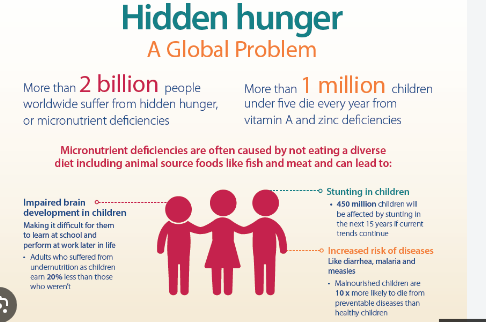
Hidden hunger refers to micronutrient deficiencies that can occur even when a person consumes enough calories.
Examples include deficiencies of:
- Iron
- Zinc
- Vitamin A
- Iodine
- Other essential vitamins and minerals
Nutrient-rich crops such as Kufri Jamunia may help improve dietary quality, but they are not a substitute for a balanced diet or other nutrition interventions.
Biofortification vs Food Fortification
| Basis | Biofortification | Food fortification |
|---|---|---|
| Meaning | Increasing nutrient content during crop development | Adding nutrients to food during processing |
| Method | Plant breeding and other crop-improvement techniques | Addition of vitamins and minerals |
| Example | Kufri Jamunia potato | Iodised salt |
| Main objective | Improve nutritional quality at the crop level | Improve nutritional quality of processed food |
Kufri Jamunia was developed through conventional breeding, not exclusively through genetic engineering.
UPSC Prelims Practice Question
Q. With reference to Kufri Jamunia, consider the following statements:
- It is a potato variety developed by ICAR-CPRI.
- Its purple colour is primarily due to anthocyanins.
- It was developed exclusively through genetic engineering.
- It has potential relevance to nutritional security.
Which of the statements given above are correct?
(A) 1 and 2 only
(B) 1, 2 and 4 only
(C) 2, 3 and 4 only
(D) 1, 2, 3 and 4