

Why in News?
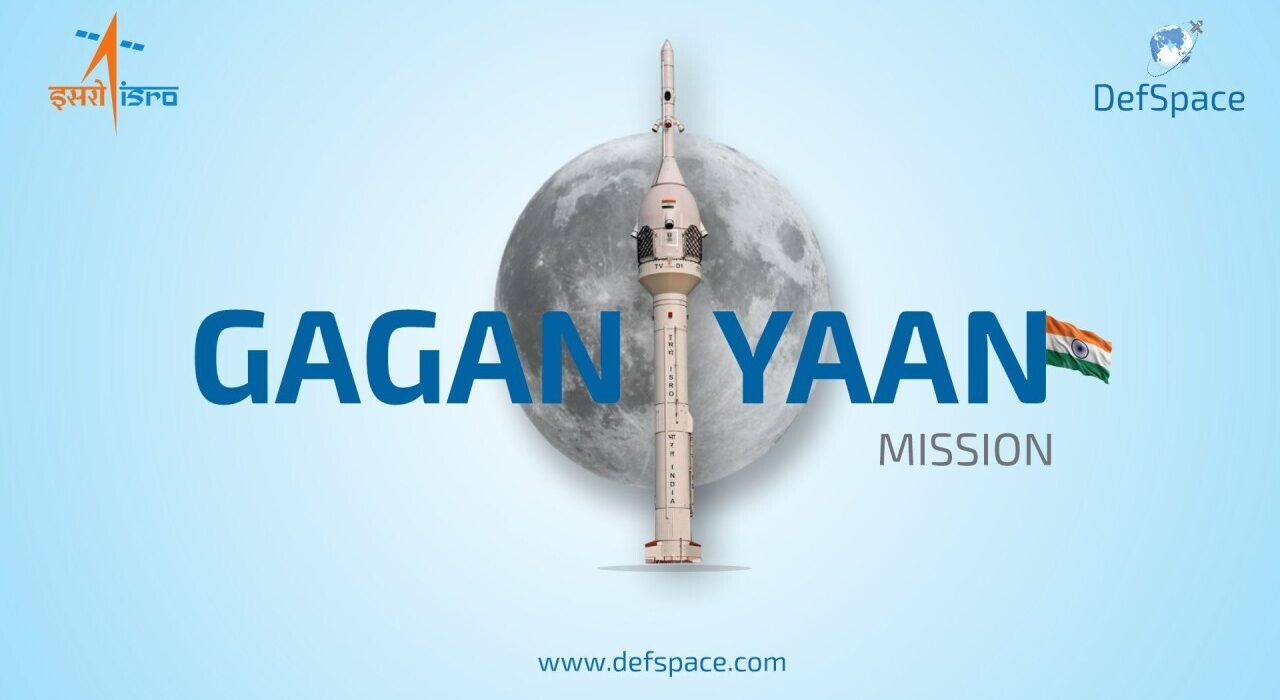
- The Indian Space Research Organisation (ISRO) is preparing for Gaganyaan, India’s first-ever human spaceflight mission.
- As part of the mission’s development, ISRO has been testing and validating the Crew Module, which is designed to safely bring astronauts back to Earth by withstanding the extreme conditions of atmospheric re-entry.
What is the Gaganyaan Mission?
- About: Gaganyaan is India’s flagship indigenous human spaceflight programme formally announced in 2018.
- The mission aims to demonstrate India’s capability to send a crew of three astronauts to a 400 km Low Earth Orbit (LEO) for a three-day mission and safely return them through a splashdown in Indian sea waters.
- It will establish India as the fourth country, after the United States, Russia, and China, to independently develop and execute a human spaceflight mission.
- The Human-rated Launch Vehicle Mark (HLVM) 3 will inject the orbital module (OM) into the desired orbit.
Orbital Module (OM):
- The Gaganyaan spacecraft is officially called the Orbital Module (OM). It is a “bi-modular” spacecraft, meaning it is made of only two main parts to save weight:
Crew Module (CM):
- A pressurised, habitable capsule equipped with an Environmental Control and Life Support System (ECLSS) that recreates Earth-like living conditions for the crew. It also incorporates a Thermal Protection System (TPS), avionics, and deceleration systems, enabling it to safely withstand atmospheric re-entry and splashdown.
