

- Syllabus : GS III – Infrastructure
- Source : TH
WHY IS IT IN NEWS?
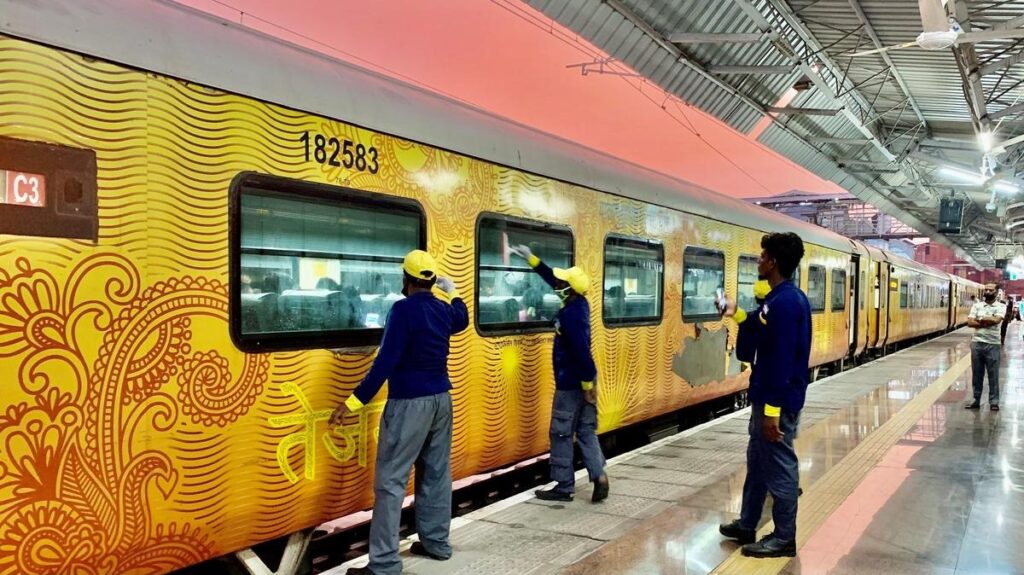
- The Delhi–Lucknow Tejas Express is set to become India’s first branded train, carrying Sprite branding.
- The initiative introduces commercial branding of a passenger train to generate additional non-fare revenue for Indian Railways.
- It represents a new approach to monetising existing railway assets without transferring their ownership.
ABOUT TEJAS EXPRESS
- Tejas Express is a premium passenger service of Indian Railways, designed to provide enhanced passenger amenities and a better travel experience.
- It is associated with modern coaches, improved interiors and onboard passenger services.
- The Delhi–Lucknow route is the one associated with the branding initiative.
TEJAS EXPRESS VS VANDE BHARAT
- Tejas Express : Premium passenger train service.
- Vande Bharat : Indigenous semi-high-speed trainset with distributed propulsion.
WHAT DOES ‘BRANDED TRAIN’ MEAN?
- A private company obtains branding/advertising rights on the train.
- The train carries the brand identity for the agreed period.
- The railway system receives commercial consideration in return.
- It does not mean that the private company owns or operates the railway asset.
KEY CONCEPT
Asset Monetisation Through Railways
- Asset monetisation means generating revenue from an existing public asset while retaining public ownership.
- In this case:
- Railway Asset → Branding Rights → Private Brand → Revenue for Railways
- Thus, the initiative can be linked to the broader objective of better utilisation of public infrastructure.
WHY IS IT SIGNIFICANT?
Non-Fare Revenue
- Indian Railways can diversify revenue beyond: Passenger fares Freight earnings.
- Other non-fare opportunities include advertising, commercial spaces, parking and commercial use of railway land.
Better Utilisation of Assets
- Railway trains have: Large passenger footfall, High visibility
- Frequent movement across important routes.
Financial Sustainability
- Additional revenue can potentially support:
- Railway modernisation
- Passenger amenities
- Maintenance
- Safety
- Infrastructure development
Public–Private Participation
- It creates a mutually beneficial arrangement:
- Railways → Provides commercial advertising space
- Private company → Provides revenue through branding
CHALLENGES
- Commercialisation vs Public Service
- Indian Railways is an essential public service. Commercial interests should not compromise passenger interests.
Transparency
- Branding rights should be allocated through: Competitive bidding
- Transparent valuation, Clear contractual conditions.
Data Privacy
- Use of passenger data for targeted advertising can raise concerns regarding: Consent, Privacy, Data security.
Limited Revenue Potential
- Advertising can supplement, but cannot replace, fundamental reforms in railway finances.
