

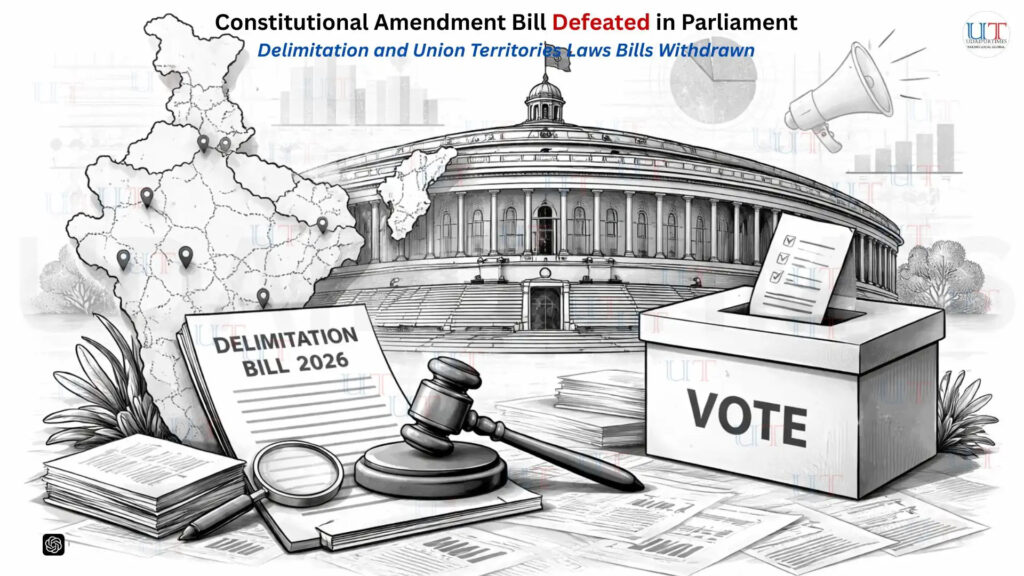
Context:
- The debate over the proposed delimitation of Lok Sabha constituencies after 2026 has intensified, with concerns from southern states about losing parliamentary representation due to their success in population control.
- UPSC Relevance: GS II (Polity & Governance)
Background:
- Delimitation is the process of redrawing the boundaries of parliamentary and assembly constituencies based on the latest Census.
- The 42nd Constitutional Amendment (1976) froze the allocation of Lok Sabha seats until 2001, later extended to 2026 by the 84th Constitutional Amendment (2001).
- The next delimitation is expected after the first Census conducted post-2026.
Highlights:
- Southern states fear a reduction in their share of Lok Sabha seats.
- The editorial argues that the issue is not merely the number of seats, but ensuring fair representation while preserving federal balance.
- Highlights the need to balance population-based representation with rewarding states that successfully implemented population control
Challenges:
- Potential imbalance between population equality and cooperative federalism.
- Fear of political under-representation of southern and northeastern states.
- Difficulty in ensuring “one person, one vote” without penalising demographic success.
- Need for broad political consensus on any constitutional changes.
Way Forward:
- Build an all-party and Centre–State consensus before delimitation.
- Consider increasing the total number of Lok Sabha seats instead of reducing any state’s representation.
- Ensure that delimitation strengthens both representative democracy and federalism.
- Base reforms on updated Census data and recommendations of an independent Delimitation Commission.
UPSC Mains Expected Question:
“The proposed delimitation exercise raises questions about balancing the principle of equal representation with India’s federal structure. Critically examine.” (250 Words)
